Description
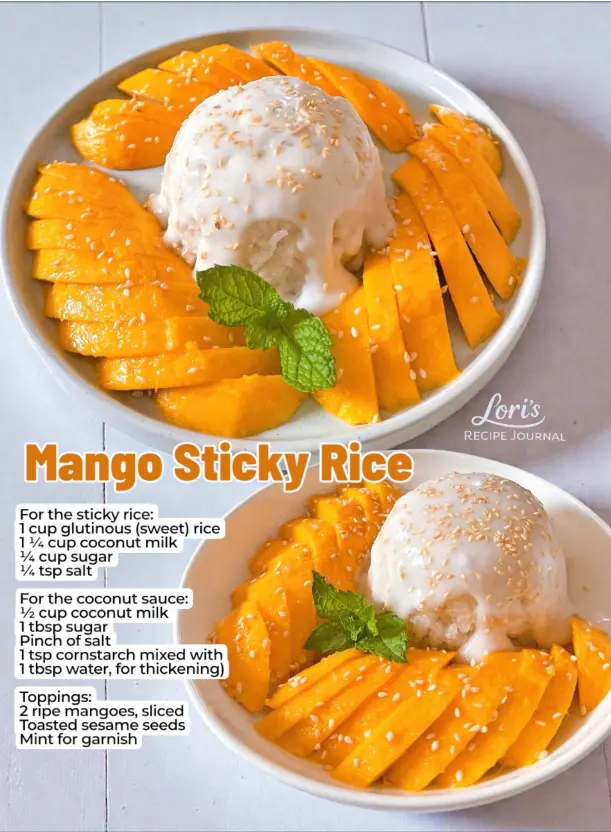
Mango Sticky Rice is a classic Thai dessert that perfectly balances sweet, creamy, and slightly salty flavors. This delightful treat features glutinous rice cooked to a sticky perfection, drenched in rich coconut milk, and served with slices of ripe, juicy mango. It’s a comforting and satisfying dessert that’s surprisingly easy to make at home. Whether you’re looking to impress guests or simply treat yourself, this recipe will transport you to the vibrant streets of Thailand with every bite.
Ingredients
For the Sticky Rice:
- 1 cup glutinous (sweet) rice
- 1 ¼ cup coconut milk
- ¼ cup sugar
- ¼ tsp salt
For the Coconut Sauce:
- ½ cup coconut milk
- 1 tbsp sugar
- Pinch of salt
- 1 tsp cornstarch mixed with 1 tbsp water (optional, for thickening)
Toppings:
- 2 ripe mangoes, sliced
- Toasted sesame seeds
Preparation
Step 1: Soak the glutinous rice. Rinse the glutinous rice under cold water until the water runs clear. This helps to remove excess starch. Place the rice in a bowl and cover it with water. Soak for at least 4 hours, or preferably overnight. Soaking ensures that the rice cooks evenly and becomes perfectly sticky.
Step 2: Steam the sticky rice. Drain the soaked rice thoroughly. Line a steamer basket with cheesecloth or parchment paper to prevent the rice from falling through. Transfer the rice to the lined steamer basket. Steam over medium heat for 25–30 minutes, or until the rice is tender and translucent. Check the water level in the steamer periodically and add more if needed.
Step 3: Prepare the coconut rice mixture. While the rice is steaming, prepare the coconut milk mixture. In a saucepan, combine 1 ¼ cup of coconut milk, ¼ cup of sugar, and ¼ tsp of salt. Heat over low heat, stirring until the sugar and salt are completely dissolved. Be careful not to boil the mixture; you just want it to be warm enough to dissolve the sugar.
Step 4: Combine rice and coconut mixture. Once the rice is cooked, transfer it to a mixing bowl. Pour the warm coconut milk mixture over the hot rice. Gently stir to combine, ensuring that all the rice is evenly coated with the coconut milk. Cover the bowl with a lid or plastic wrap and let it sit for 20–30 minutes. This allows the rice to absorb the coconut milk, resulting in a creamy and flavorful sticky rice.
Step 5: Make the coconut sauce. While the rice is absorbing the coconut milk, prepare the coconut sauce. In a small saucepan, combine ½ cup of coconut milk, 1 tbsp of sugar, and a pinch of salt. Heat over low heat, stirring until the sugar is dissolved. If you prefer a thicker sauce, mix 1 tsp of cornstarch with 1 tbsp of water to form a slurry. Add the cornstarch slurry to the saucepan and simmer until the sauce thickens slightly.
Step 6: Assemble and serve. Peel and slice the ripe mangoes. To serve, scoop a portion of the sticky rice onto a plate. Arrange the mango slices alongside the rice. Drizzle generously with the coconut sauce. Sprinkle with toasted sesame seeds for added flavor and texture. Garnish with fresh mint leaves, if desired. Serve immediately and enjoy!
Why You’ll Love This Recipe
- Authentic Taste: Captures the true essence of Thai Mango Sticky Rice.
- Easy to Make: Simple steps and readily available ingredients make this recipe accessible to all skill levels.
- Perfect Balance of Flavors: The combination of sweet, creamy, and slightly salty creates a harmonious and addictive taste.
- Impressive Dessert: A beautiful and delicious dessert that’s sure to impress your friends and family.
- Customizable: Adjust the sweetness and thickness of the coconut sauce to suit your preferences.
Serving Suggestions
- Serve warm for the best flavor and texture.
- Pair with a scoop of coconut ice cream for an extra indulgent treat.
- Garnish with fresh mint leaves for a pop of color and freshness.
- Enjoy as a dessert after a spicy Thai meal to cool the palate.
Tips
- Rice Quality: Use high-quality glutinous rice for the best results.
- Soaking Time: Don’t skip the soaking step; it’s crucial for achieving the right texture.
- Coconut Milk: Use full-fat coconut milk for the richest and creamiest flavor.
- Mango Ripeness: Ensure the mangoes are ripe but not overly soft for the best taste and presentation.
- Storage: Store leftover sticky rice in an airtight container in the refrigerator. Reheat gently before serving.
Preparation Time
- Soaking Time: 4 hours (or overnight)
- Preparation Time: 20 minutes
- Cook Time: 30 minutes
- Total Time: 4 hours 50 minutes
Nutrition Information
(Note: Nutritional information is an estimate and may vary based on specific ingredients and serving sizes.)
- Calories: 450 kcal
- Protein: 5g
- Sodium: 150mg
Conclusion
Mango Sticky Rice is more than just a dessert; it’s an experience. The combination of tender, sticky rice, creamy coconut milk, and sweet, juicy mangoes is a celebration of flavors and textures. This recipe brings the authentic taste of Thailand to your kitchen, allowing you to create a memorable dessert that everyone will love. Whether you’re a seasoned cook or a beginner, this recipe is easy to follow and guarantees a delicious result every time. So gather your ingredients, follow the steps, and get ready to indulge in the ultimate Thai treat!
Questions and Answers
Q1: Can I use regular rice instead of glutinous rice?
A: No, glutinous rice (also known as sweet rice) is essential for this recipe. It has a higher starch content, which gives the dish its signature sticky texture. Regular rice will not produce the same result.
Q2: Can I make this recipe ahead of time?
A: Yes, you can prepare the sticky rice and coconut sauce ahead of time. Store them separately in the refrigerator and reheat gently before serving. Freshly sliced mangoes are best, so add them just before serving.
Q3: How do I know if the mangoes are ripe enough?
A: Ripe mangoes should have a slightly soft feel when gently squeezed. They should also have a fragrant aroma near the stem. Avoid mangoes that are too firm or have bruises.
Q4: Can I use a rice cooker to cook the glutinous rice?
A: Yes, you can use a rice cooker. Follow the manufacturer’s instructions for cooking glutinous rice, and then proceed with the recipe as directed.
Q5: What can I do if my coconut sauce is too thin?
A: If your coconut sauce is not thick enough, you can add a cornstarch slurry (1 tsp cornstarch mixed with 1 tbsp water) to the saucepan and simmer until it thickens slightly. Make sure to stir constantly to prevent lumps from forming.